
HYX-E100-H vs HYX-E150-H: Which Stack Size Suits Your Home?
If a HYXiPOWER quote has landed in your inbox with "HYX-E100-H" or "HYX-E150-H" listed as a line item, you're looking at two sizes from the same modular battery family — not two different products. Both belong to HYXiPOWER's HYX-E high-voltage stackable series, and the model number itself tells you the nominal capacity: E100 stores roughly 10.6kWh of battery energy, while E150 stores roughly 15.9kWh. The question isn't which is "better" — it's which stack height actually matches how much your household uses overnight.
HYX-E100-H vs HYX-E150-H: The Core Numbers
Both units share the same underlying battery cell architecture, so the comparison mostly comes down to how many packs are stacked in the tower.
Spec | HYX-E100-H | HYX-E150-H |
Nominal battery energy | 10.6 kWh | 15.9 kWh |
Usable energy | 9.0 kWh | 13.5 kWh |
Nominal output power | 6.0 kW | 9.0 kW |
Nominal voltage | 204.8V | 307.2V |
Working voltage range | 172.8–230.4V | 259.2–345.6V |
Max charge/discharge current | 35A | 35A |
Dimensions (W×H×D) | 700 × 950 × 200mm | 700 × 1,300 × 200mm |
Net weight | 115kg | 165kg |
Cell chemistry | LiFePO4 | LiFePO4 |
Ingress protection | IP65 | IP65 |
Cycle life | >6,000 cycles to 70% EOL | >6,000 cycles to 70% EOL |
The practical difference is straightforward: the HYX-E150-H holds about 50% more usable energy and can push 50% more continuous output power (9.0kW vs 6.0kW) than the HYX-E100-H, in a taller cabinet that weighs an extra 50kg. Both are built on the same modular "stacker" concept, which is why installers can quote either size against the same inverter platform without changing the rest of your system design.
Which Stack Size Actually Suits Your Home?
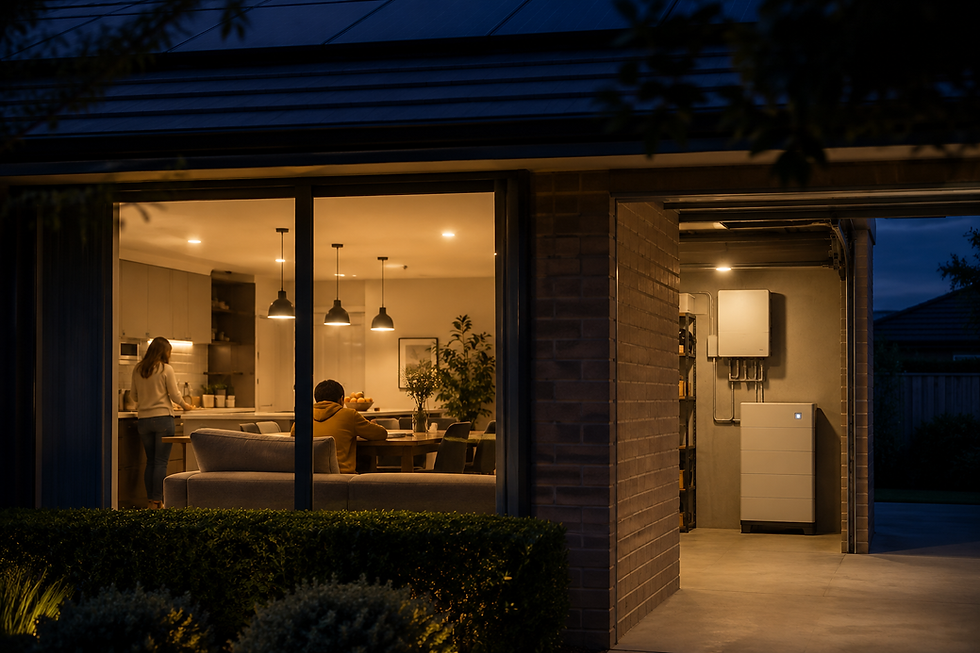
This is really a question about your evening and overnight electricity draw, not the sticker price of the unit. A 9.0kWh usable HYX-E100-H is generally proportioned for a smaller household running typical evening loads — lighting, a fridge, a TV, and occasional cooking — off stored solar rather than the grid. A 13.5kWh usable HYX-E150-H suits homes with heavier evening and overnight consumption: a larger family, ducted air-conditioning, pool pump cycles, or EV charging scheduled after sunset, where a smaller battery would be drained well before sunrise.
The higher 9.0kW output rating on the HYX-E150-H also matters for homes that run several high-draw appliances simultaneously — induction cooktops, electric ovens, and air-conditioning compressors starting up together can momentarily exceed a 6.0kW ceiling. If your quote shows an E100-H and your household regularly runs multiple large appliances at once, it's worth asking your installer whether the E150-H (or stacking two E50-H modules alongside it) gives you more comfortable headroom rather than tripping the battery's output limit during peak evening use.
Because both units share the same stackable "H" platform, upsizing later isn't necessarily a full system replacement — but pack availability and inverter pairing depend on your specific installation, so this is a conversation to have with your installer before signing off on a quote, not an assumption to make from the datasheet alone.
Why Solar Panels and Battery Storage Make Sense in Australia
Australia's household electricity math increasingly favours pairing solar panels with a battery like the HYX-E series, rather than exporting excess solar back to the grid for a low feed-in tariff.
A Grid Built for Sunshine
Rooftop solar has become the backbone of Australia's small-scale energy market. Clean Energy Council data for the second half of 2025 puts installed rooftop PV capacity at 28.3GW across roughly 4.3 million homes — a fleet that now generates more capacity than the country's entire coal generation sector combined, and which contributed 14.2% of the electricity generated nationally over that period, up from 13.4% a year earlier.
Batteries Are Catching Up Fast
Battery uptake is moving even faster than panel uptake. The Clean Energy Council recorded 183,245 batteries sold in the second half of 2025 alone — more than the previous four years combined — largely credited to the federal Cheaper Home Batteries Program, which made batteries eligible for Small-scale Technology Certificate discounts from 1 July 2025. Clean Energy Regulator figures cited by industry trackers put cumulative battery installations under the scheme above 400,000 by mid-2026.
Time-of-Use Pricing Rewards Stored Solar
From 1 July 2026, the Australian Energy Regulator's 2026–27 Default Market Offer also introduced the Solar Sharer Offer, giving eligible households free grid electricity for a few hours in the middle of the day and slightly higher rates outside that window. That structure makes a battery more valuable, not less — a system that fills up on free or cheap midday solar and discharges it through the evening peak sidesteps the higher time-of-use rates altogether, rather than relying on the free window alone.
Talk to a HYXiPOWER Specialist Before You Decide
Datasheet comparisons only tell part of the story — the right stack size depends on your roof orientation, existing panel capacity, inverter pairing, and how your household actually uses electricity after dark. HYXiPOWER, now trading as HYXI, is the manufacturer behind the HYX-E series and AU Solar Mate's battery storage partner; you can read more about their engineering background and Australian product approvals on our About HYXI page. If you're ready to see how an HYX-E100-H or HYX-E150-H stack would actually perform on your home, get a free, no-obligation quote from AU Solar Mate. And before you finalise a stack size, it's worth checking our 2026 Rebate Guide — current federal and state incentives can materially change which size makes the best financial sense for your household.
Why Choose AU Solar Mate?
At AU Solar Mate, we handle the entire solar battery installation process — from system design to installation and support.
Our services include:
Battery sizing assessments
Hybrid inverter recommendations
Backup power setup
Compliance management
Monitoring configuration
You work directly with experienced technical specialists — not sales teams.
📞 Call: +61 1800 508 922
🌐 Website: AU Solar Mate
✉️ Email: sales@ausolarmate.com.au


Comments